
Hot Water Without Running Out Mid-Shower
Water Heater Services in Byers for homes with heating issues, leaks, or inconsistent hot water supply
Water heaters that produce lukewarm water, run out of capacity too quickly, or leak around tank bases have reached the point where repairs or replacement are necessary to restore reliable function. Hometown Home Services diagnoses heating element failures, thermostat malfunctions, sediment buildup, and tank corrosion, then explains whether repairs will extend system life or whether replacement makes more financial sense based on age and damage extent. The service covers both traditional tank systems and tankless units, helping homeowners in Byers choose the right solution for their household demand and budget.
Diagnosing water heater problems involves testing electrical or gas supply, measuring output temperature, inspecting anode rods for remaining material, checking pressure relief valves for proper operation, and draining tanks to assess sediment accumulation. In areas with hard well water, mineral deposits settle at tank bottoms and insulate heating elements, forcing them to work harder and fail sooner while reducing available hot water capacity.
Schedule a water heater assessment to identify the specific cause of performance problems and determine whether repair or replacement is the appropriate solution.
What You Notice Once Systems Are Restored
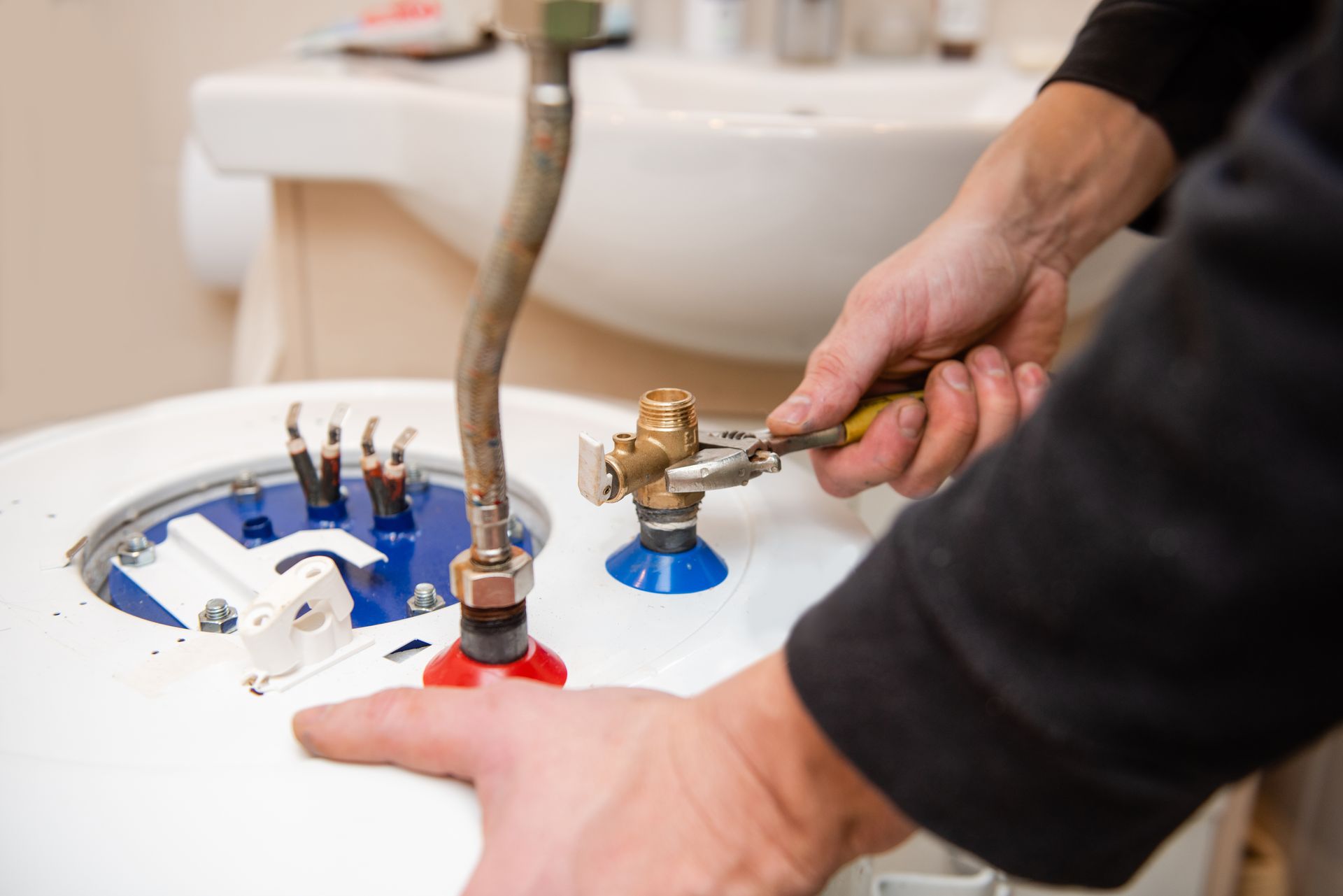
Water heater service includes replacing failed heating elements or thermostats in electric units, cleaning burner assemblies and flame sensors in gas models, flushing sediment that's accumulated over years of operation, and testing all safety controls to verify proper shutdown under fault conditions. For tankless systems, the process involves descaling heat exchangers where mineral deposits restrict flow and reduce efficiency, and verifying that flow sensors trigger burner ignition correctly.
After service or replacement, you'll have consistent hot water that reaches target temperature within expected timeframes, capacity that matches household demand without running out during normal use, and systems that operate quietly without the popping or rumbling sounds caused by sediment heating and cooling. Efficiency improves as well, since clean heating elements and burners transfer energy directly to water rather than through layers of insulating mineral deposits.
Maintenance services extend system lifespan by addressing sediment before it causes permanent damage, replacing sacrificial anode rods before tank corrosion begins, and catching minor leaks before they worsen into emergency tank failures that flood utility rooms. Hometown Home Services helps you understand the expected remaining life of your current system so you can plan replacements proactively.
What Property Owners Usually Ask
Water heater decisions involve balancing repair costs against replacement benefits, and understanding system options helps you make informed choices.
How long do water heaters typically last in Byers?
Traditional tank heaters last 8 to 12 years depending on water quality and maintenance frequency, while tankless units can reach 15 to 20 years, though well water with high mineral content often shortens lifespan for both types due to accelerated scaling and corrosion.
What causes water heaters to leak at the base?
Tank corrosion eventually penetrates through steel once anode rods are depleted and no longer protect the interior, creating pinhole leaks that worsen quickly and cannot be repaired—only full replacement resolves base leaks.
When does it make sense to switch from tank to tankless systems?
Tankless units make sense when space is limited, household demand patterns involve long intervals between hot water use, or energy efficiency is a priority, but they require adequate gas supply or electrical capacity and perform poorly with very hard water unless paired with water softening.
Why does hot water run out faster than it used to?
Sediment accumulation reduces effective tank capacity, failed heating elements can't maintain temperature under demand, or thermostats may have drifted out of calibration, all causing perceived capacity loss even when the tank hasn't changed size.
What maintenance extends water heater life?
Annual flushing removes sediment, anode rod replacement every 3 to 5 years prevents tank corrosion, and pressure relief valve testing verifies safety controls function correctly, collectively adding years to system life.
Hometown Home Services explains the trade-offs between repair and replacement based on your specific system condition and household needs, providing clear cost comparisons that help you decide the best path forward. Arrange a consultation to review your water heater's current performance and discuss your options.